Moving from Snowflake to Databricks: A practical guide to modernizing data and AI
TL;DR:
A Snowflake-to-Databricks migration should fix architecture issues, not copy the same pipelines, tools, and governance gaps into a new platform.
Start with workload assessment. Identify dependencies, cost drivers, performance baselines, modernization opportunities, and workloads that should stay, move, or retire.
Build the Databricks foundation before migration with Unity Catalog, access controls, storage standards, compute policies, CI/CD, monitoring, and security controls.
Migrate data and pipelines in waves, then validate with row counts, reconciled business metrics, performance benchmarks, security checks, and user sign-off.
Use accelerators for SQL conversion, ingestion, orchestration, governance, and ML lifecycle management, but keep architecture decisions with engineers.
Enterprise data teams are being asked to support far more than SQL analytics and BI dashboards. They now need to power AI and machine learning, real-time pipelines, feature engineering, governed data products, and reliable controls across data and AI outputs.
That shift is pushing many organizations to rethink cloud data warehouse-centric architectures. When those architectures start to feel stretched, Databricks often becomes part of the conversation as a more unified foundation for data engineering, analytics, governance, and AI.
In this blog, we will walk through why organizations consider moving from Snowflake to Databricks, where the migration can create value, and how to approach it without disrupting the business.
Why this architecture conversation is happening now
Snowflake is widely used for SQL analytics, BI performance, and operational simplicity, while Databricks has evolved from large-scale data engineering and machine learning into the Lakehouse model.
For most enterprises, the real question is not which platform is “better,” but which architecture can support the next generation of data and AI workloads.
The decision to migrate usually builds over time, as teams face cost pressure, operational complexity, governance gaps, and AI requirements that are hard to support with a warehouse-centric setup alone.
Four signs it may be time to rethink the architecture
Fragmented data and AI ecosystems
Separate tools for ingestion, transformation, orchestration, ML experimentation, governance, and lineage can solve individual problems but create duplicated pipelines, inconsistent metadata, and harder-to-manage controls as the environment grows.Rising costs on large-scale ETL
As transformation pipelines scale, compute costs become harder to predict, especially for engineering-heavy workloads spread across multiple tools. Consolidating more work on one platform can improve cost visibility and efficiency.Growing demand for real-time and AI workloads
Streaming ingestion, feature engineering, vector search, retrieval, GPU-accelerated training, and governed AI assets are easier to support when they are built into the platform instead of added through separate tools.Open architecture requirements
Open table formats such as Delta Lake and Apache Iceberg, along with broader ecosystem compatibility, are also becoming important considerations for interoperability and reduced lock-in.
Treat migration as modernization, not a lift-and-shift
A successful Snowflake-to-Databricks migration is not just a platform move. If the same architectural patterns are recreated, the same problems usually follow.
The teams that get the most value use migration to simplify fragmented architectures, modernize ETL patterns, standardize governance, bring engineering and ML workflows closer together, optimize compute, and create reusable data products.
To make that shift practical, Fractal uses a six-phase playbook that moves teams from assessment to modernization, validation, and AI enablement in a controlled sequence.
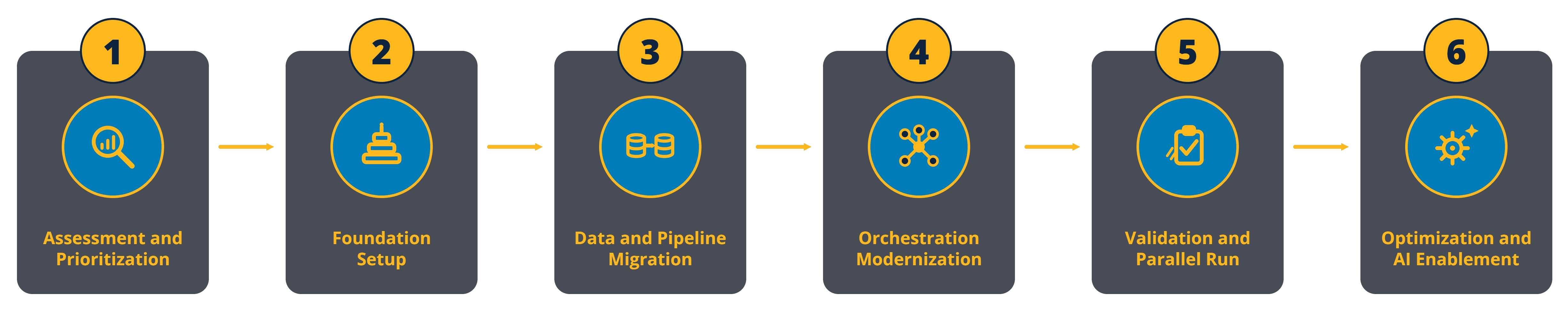
Figure 1: Fractal’s six-phase migration playbook
At a high level, the journey works best when each step builds on the last:
Start by identifying what should move, what should stay, and where modernization will create the most value.
Set up the Databricks foundation first, so governance, security, access, and operating standards are in place before workloads migrate.
Move data and pipelines in controlled waves, modernizing them where needed instead of simply recreating the old architecture.
Simplify orchestration so jobs, schedules, dependencies, monitoring, and recovery are easier to manage.
Run both environments in parallel and validate results carefully before switching business users to the new platform.
Use the modernized platform to improve performance, strengthen governance, and enable advanced analytics and AI.
With that end-to-end journey in mind, the next section explains how each phase works in practice.
Fractal’s six-phase migration playbook
The playbook below turns the migration journey into a practical sequence of phases. Each phase has a clear purpose, specific activities, and tangible outputs, so teams can move from strategy to execution without losing control of cost, quality, or business continuity.
Phase 1: Assessment and Prioritization
Before moving workloads, a structured assessment surfaces technical complexity, hidden dependencies, operational risks, and modernization opportunities, while tying the investment to measurable business outcomes.
The assessment covers the following workload categories:
Workload category | Examples |
|---|---|
Data pipelines | Ingestion jobs, CDC pipelines, batch loads |
BI and reporting | Dashboards, semantic layer dependencies, scheduled reports |
SQL objects | Stored procedures, views, functions, dynamic SQL |
Orchestration | Task schedules, workflow dependencies, external triggers |
ML workflows | Notebooks, training jobs, feature pipelines, model serving |
Governance | RBAC configurations, data sharing, masking policies |
The assessment delivers the following outputs:
Migration wave plan with complexity classification
Cost and performance baselines for current workloads
Dependency map across pipelines, reports, and downstream systems
Modernization opportunity assessment
Platform fit analysis for workloads that should stay, move, or be retired
Fractal combines automated workload analysis, stakeholder workshops, telemetry assessment, and dependency discovery to build an evidence-based migration roadmap.
Not every workload should move at once. Early waves should focus on workloads that are easy to justify, easy to validate, and likely to show measurable value:
High-cost ETL workloads with clear ROI on compute
Engineering-intensive pipelines ready for Spark modernization
AI/ML-adjacent workloads that benefit from native Lakehouse capabilities
Streaming and near-real-time use cases
BI-focused workloads, which typically belong to later waves with lower immediate modernization impact
Phase 2: Foundation Setup
Governance is easier and less risky to establish before workloads move. This phase builds the Lakehouse foundation across access controls, catalog structures, monitoring, and deployment patterns.
The table below outlines the core setup activities across each area.
Category | Key activities |
|---|---|
Governance | Unity Catalog implementation, access control hierarchy, data classification |
Storage standards | Delta Lake table conventions, medallion architecture definition, schema evolution rules |
Compute | Cluster policies, serverless SQL warehouse configuration, auto-termination rules |
DevOps | CI/CD pipelines, environment segregation across Dev, Test, and Prod, secrets management |
Observability | Monitoring setup, alerting frameworks, audit logging |
Security | Networking controls, credential management, encryption standards |
Infrastructure-as-code, automated deployment pipelines, and centralized governance frameworks make the migration repeatable and keep the platform maintainable after go-live.
Phase 3: Data and Pipeline Migration
This phase moves ingestion, transformation, and processing workloads into Databricks while modernizing them where it adds value.
Apache Spark for distributed processing
Lakeflow Spark Declarative Pipelines for managed ETL
Lakeflow Workflows for orchestration
dbt on Databricks for SQL-based transformations
Auto Loader for incremental file ingestion
Structured Streaming for real-time pipelines
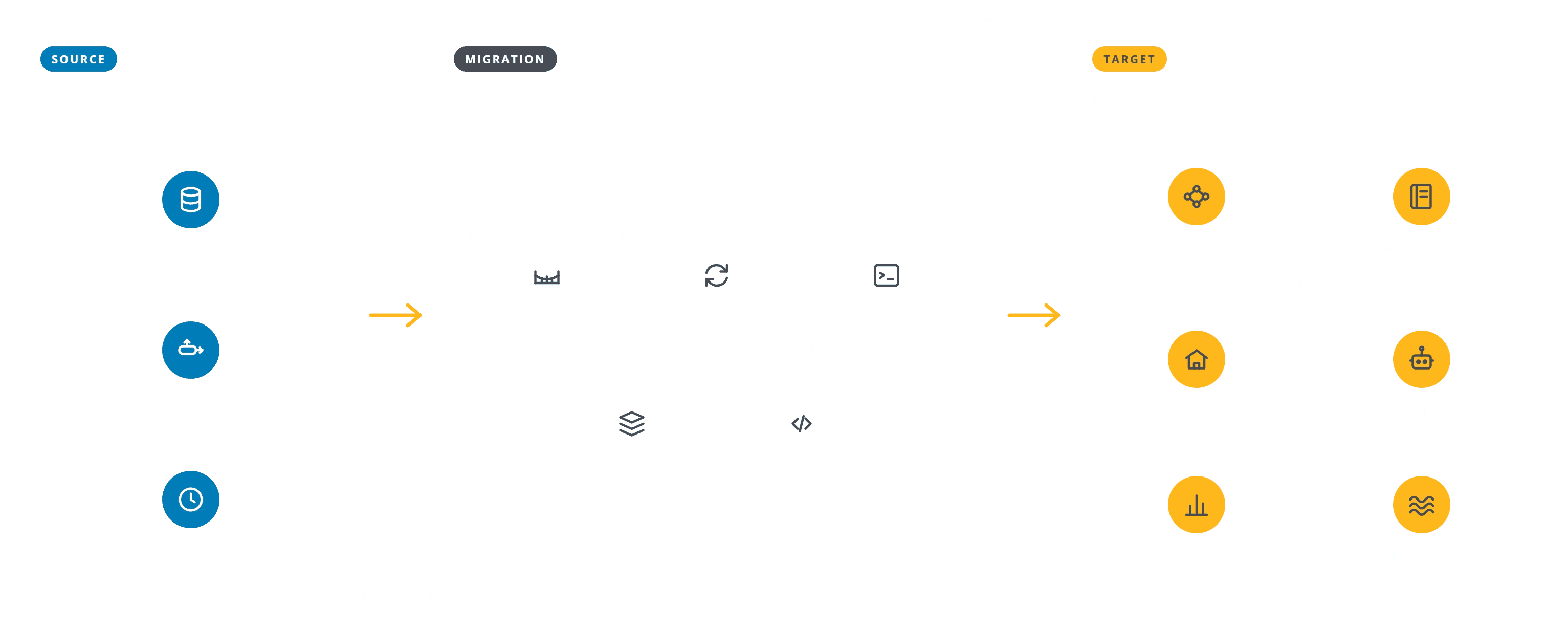
Figure 2: Data migration from Snowflake to Databricks
The table below shows how common workload types map to their migration approach.
Category | Key activities |
|---|---|
Batch ingestion pipelines | Refactor to Auto Loader or Lakeflow pipelines with Delta Lake targets |
ELT/ETL frameworks | Redesign for distributed Spark processing or dbt on Databricks |
CDC pipelines | Migrate to Structured Streaming with Delta merge patterns |
Data quality processes | Standardize using Delta Lake expectations or dbt tests |
Schema evolution logic | Leverage Delta Lake schema evolution and merge schema options |
Transformation workflows | Refactor SQL-heavy logic and optimize for Spark distributed compute |
Direct SQL translation is rarely enough. Many workloads perform better when refactored for Spark-based parallel processing, so optimization should be part of the migration rather than a final clean-up step.
Phase 4: Orchestration Modernization
Many enterprise orchestration layers grow organically through tasks, streams, external schedulers, and custom scripts. This phase simplifies that landscape and moves toward workflow frameworks that are easier to observe, operate, and support.
The table below shows how legacy orchestration components map to their Databricks equivalents.
Legacy component | Databricks equivalent |
|---|---|
Snowflake Tasks | Lakeflow Workflows |
Snowflake Streams | Structured Streaming with Delta CDC |
External schedulers such as Airflow and Control-M | Lakeflow Workflows or retained external orchestrator with Databricks API triggers |
Custom dependency frameworks | Metadata-driven workflow architectures in Lakeflow |
Event-driven triggers | API-triggered Lakeflow pipelines |
When orchestration is modernized, teams gain stronger operational control in four key areas:
End-to-end lineage tracking across all jobs and pipelines
Unified observability and alerting in a single pane
Automated retry and failure recovery management
SLA monitoring with measurable operational accountability
Standardized orchestration reduces troubleshooting effort, improves production support, and creates a stronger foundation for real-time and AI-driven workloads.
Phase 5: Validation and Parallel Run
Validation is where migration risk is managed. The safest approach is to run both environments in parallel until business users are confident that the new platform produces the right outcomes.
The table below outlines the validation framework.
Category | Coverage |
|---|---|
Structural validation | Schema comparison, row counts, null checks, duplicate detection, min/max ranges |
Business reconciliation | Aggregate totals, financial comparisons, query result consistency |
Performance benchmarking | Query timing, pipeline SLA compliance, cluster utilization |
User acceptance testing | Dashboard consistency, report accuracy, downstream application behavior |
Security alignment | Access control verification, row-level security, column masking parity |
Downstream dependency integrity | Confirming all-consuming applications work correctly against the new platform |
Once the validation dimensions are defined, teams need a controlled execution path that keeps data synchronized, gives business users time to compare outputs, and preserves rollback options until the new platform is trusted. Fractal follows an eight-step sequence.
Initial bulk load into Databricks
Incremental sync with the source system maintained
Parallel run with both platforms active
Business validation sign-off
Final delta load
Production switch
Rollback plan activation criteria defined
Controlled legacy decommissioning
Success should be measured by business outcomes and operational reliability, not just by the number of objects migrated.
Phase 6: Optimization and AI Enablement
Once the core migration is stable, the platform can support advanced analytics and AI use cases that create value beyond the migration itself.
Capability | Enabling technology |
|---|---|
ML lifecycle management | MLflow for experiment tracking, model registry, and deployment |
Feature engineering at scale | Databricks Feature Store |
Generative AI applications | Mosaic AI and LLM serving endpoints |
Intelligent search | Vector Search with embedding pipelines |
Real-time analytics | Structured Streaming and Databricks SQL |
RAG architectures | Vector Search with Unity Catalog-governed document stores |
AI-driven personalization | Feature Store with real-time serving infrastructure |
The long-term value is faster AI innovation, stronger governance, better operational control, and more agility for the business, enabled by a foundation that brings data engineering, analytics, governance, and AI together.
Migration Accelerators
After the six-phase journey establishes the target operating model, the next question is how to execute it consistently at scale. This is where migration accelerators become important. They help convert the modernization roadmap into repeatable patterns, reduce manual rework, and keep delivery teams aligned across assessment, migration, validation, governance, and AI enablement.
Accelerator | Primary use |
|---|---|
Databricks Lakebridge | SQL conversion automation, migration assessment, reconciliation support |
dbt on Databricks | SQL-based transformation modernization |
Unity Catalog | Governance standardization, metadata management, lineage |
Lakeflow Spark Declarative Pipelines | Managed pipeline modernization and deployment |
Lakeflow Workflows | Orchestration consolidation |
MLflow | ML lifecycle standardization |
Auto Loader | Scalable, incremental file ingestion |
Automation accelerates SQL conversion, assessment, testing, and deployment, but it does not replace architectural thinking. Engineers still need to make the design decisions that determine whether the migrated platform performs better.
Conclusion
A successful Databricks migration is more than a platform move. Fractal’s approach combines upfront assessment, phased modernization, governed foundations, automated migration factories, and rigorous validation so organizations can reduce risk, modernize faster, and build a stronger foundation for future data and AI use cases.
Recent Blogs